CNC Automation Benefits for Precision Manufacturing Operations
Precision manufacturing has always lived in the narrow band between speed and accuracy. Push too hard for throughput and scrap rises. Focus only on perfect dimensions and the shop misses delivery dates, burns margin, and frustrates customers who need parts on time. CNC automation changes that balance in a practical way. It does not eliminate the realities of machining, fixturing, material variation, or tool wear. What it does is create a more stable operating environment, one where repeatable processes carry more of the load than individual heroics.
That distinction matters on the floor. Many shops still run excellent work with highly skilled machinists loading parts by hand, checking offsets, clearing chips, and keeping multiple spindles moving through discipline and hustle. There is nothing wrong with that model until the business grows, labor tightens, or customers start asking for more consistency across higher volumes and shorter lead times. Then the old bottlenecks become obvious. Cycle time is no longer just spindle time. It includes waiting for an operator, walking between machines, loading raw stock, unloading finished parts, reorienting components, and dealing with preventable interruptions.
CNC automation addresses those gaps directly. Whether the solution is simple machine tending with a compact robot or a fully integrated cell with conveyors, vision, probing, wash stations, and data collection, the benefit is not just labor reduction. The real payoff is process control. Shops that understand this tend to get the best return because they automate where variation hurts them most.
Where the gains really come from
The first misconception about CNC automation is that it only makes sense for very large production runs. That used to be more true when systems were expensive, hard to reprogram, and built around a narrow range of part sizes. Modern automation is more flexible. Quick-change grippers, smarter workholding, better robot programming interfaces, and stronger integration with CNC controls have brought the threshold down.

A shop does not need to be making hundreds of thousands of identical parts to justify automation. Repetitive families of parts, parts with long cycle times, parts running on second shift with limited staffing, and jobs that create ergonomic strain are often strong candidates. In a typical operation, the machine tool itself already represents a significant capital investment. If that spindle sits idle during breaks, shift changes, operator handoffs, or weekends, the business is not extracting the value it paid for. Automation improves spindle utilization, which is one of the clearest paths to better financial performance in a machining environment.
There is also a less obvious gain. Once loading and unloading become consistent, process engineers can see the machining cycle more clearly. Outliers stand out faster. Tool life trends become easier to track. Fixture problems reveal themselves sooner. Shops that automate often discover they were carrying hidden variation in the manual portions of the process. Removing that human variability does not reduce the importance of skilled people. It allows their skill to be used where it counts most, in setup strategy, problem solving, toolpath refinement, and quality control.
Machine tending is often the highest-value first step
For many precision manufacturing operations, machine tending is the gateway into CNC automation. It is usually less complex than a greenfield lights-out cell, and the return can be measured quickly. A robot picks a blank, loads the machine, waits or coordinates with the control, unloads the finished part, and places it in a bin, tray, conveyor, or secondary station. On paper that sounds simple. In practice, the details determine whether the cell runs smoothly for months or becomes another underused asset in the corner.
The strongest machine tending projects start with part presentation and orientation. If incoming blanks arrive in random positions, the system either needs a reliable vision solution or a more controlled feed method. If parts vary slightly because they come from a rough process upstream, the gripper has to tolerate that variation without compromising placement. If chips cling to a finished part, the unload path and part drop zone must prevent jams and part damage.
I have seen cells struggle for weeks because teams focused on robot reach and payload but underestimated basic handling realities. One common example is a machined aluminum part with a cosmetic face that cannot be scratched. The first gripper design may hold securely but leave witness marks. The second may solve the marking issue but lose positional reliability. That is where end of arm tooling becomes a serious engineering concern rather than an accessory. In CNC automation, the gripper is often the difference between a stable cell and a temperamental one.
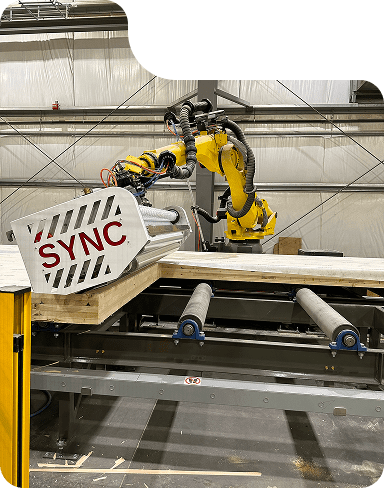
A good machine tending cell is built around repeatability at every handoff point. The robot must present the part the same way every cycle. The chuck or fixture must tolerate slight variation without creating misloads. The control logic must confirm safe states before movement. And the operator interface must make recovery clear when the inevitable interruption occurs.
Precision improves when the process becomes more predictable
Precision manufacturing is not just about what the machine can hold on a fresh setup. It is about what the process can hold over hours, shifts, and job changes. Automation helps because it narrows the range of motion around each step. The robot does not get tired at hour nine. It does not rush a load after lunch. It does not set a part down in a slightly different orientation because the previous machine alarm broke concentration.
That consistency matters in real jobs. Consider a part with a critical bore and a secondary milled feature that depends on accurate workholding. If the operator manually seats the part with slightly different force or angle from cycle to cycle, the machining operation may still pass most of the time, but the occasional dimensional drift appears in inspection. Automation cannot solve every fixturing weakness, but it can remove a layer of inconsistency that masks root causes.
This is also why integrated inspection features pair so well with automation. Probing inside the CNC, part presence sensing, and post-process gauging can all be tied into the cell logic. When a dimension starts to move, the system can flag the issue before a full tray of suspect parts accumulates. That is not magic. It is disciplined process design. The benefit is simple: fewer surprises, fewer urgent sort jobs, and more confidence when a customer asks for tighter control plans.
Labor pressure changes the economics
A decade ago, some owners viewed automation mainly as a labor replacement strategy. That framing was too narrow, and it often made people on the floor defensive. The better view is labor redeployment. Skilled machinists are expensive because they create value that is hard to replace. Asking them to spend a full shift opening doors, loading blanks, and stacking finished parts is usually not the best use of that capability.
When CNC automation takes over repetitive handling, the shop can redeploy experienced people into setup reduction, process optimization, quality work, preventative maintenance, and training. Those jobs directly improve margins and capacity. This matters even more in a tight labor market where hiring experienced machinists, programmers, and maintenance technicians can take months.
There is also a retention angle that does not get enough attention. Repetitive loading of heavy or awkward parts wears people down. It creates fatigue and raises the risk of strain injuries. Automation can remove a category of work that is both physically demanding and mentally monotonous. The result is often a better operating environment, especially on second or third shift where a small team may be responsible for a large group of machines.
That does not mean automation is effortless for the workforce. Someone still has to own setups, changeovers, alarms, and continuous improvement. The best shops are transparent about that from the start. They train operators to run cells, recover faults, inspect parts, and understand process status rather than simply feed machines.
Lights-out production is possible, but only when the basics are disciplined
Shops love the idea of unattended machining overnight. The phrase itself tends to attract attention from customers and ownership. Yet lights-out success rarely comes from ambition alone. It comes from brutally honest preparation. Tool life must be predictable. Chip evacuation must be reliable. Coolant management has to be under control. Part loading must be foolproof or at least fault-detectable before damage occurs.
A surprisingly high number of failed automation efforts come from trying to automate an unstable process. If a job regularly requires operator intuition to clear stringy chips, tweak offsets, or reseat stock, then adding a robot usually magnifies the weakness rather than fixing it. Stability first, automation second is still the right order.
When the process is mature, however, unattended production can be transformative. A shop with two horizontal machining centers and a well-designed tending system may gain several extra productive hours per day without adding headcount. Over a year, that can amount to a substantial capacity increase. The exact numbers vary by part family, cycle time, and utilization, but the principle is durable: every hour of spindle time recovered from non-cutting tasks has measurable value.
HMI programming can make or break the operator experience
Automation discussions often focus on the robot arm, CNC brand, or guarding layout. Less attention goes to HMI programming, even though it is one of the most important factors in daily usability. A https://israelaxjq874.scriblorax.com/posts/how-manufacturing-automation-is-reshaping-canadian-production-facilities cell that technically runs but confuses operators during startup, recipe change, or fault recovery will never reach its potential.
A strong human-machine interface does a few things exceptionally well. It shows the current machine state clearly. It guides the operator through changeovers without forcing them to memorize a sequence. It distinguishes between alarms that require maintenance and stoppages that can be resolved safely by trained production staff. And it records enough data to help engineering understand recurring downtime.
I have seen cells where an alarm message simply read “part error” with no useful context. That kind of design wastes time and creates anxiety, particularly on off shifts. Compare that with an HMI that tells the operator the part failed presence confirmation at station two, offers a recovery sequence, and logs the event count. The second system shortens downtime and builds trust.
Good HMI programming also matters during scale-up. If the shop plans to add similar cells later, a consistent interface reduces training time and makes staffing more flexible. Operators can move between cells with less friction. Maintenance can troubleshoot faster. Supervisors can read status at a glance. Those benefits are easy to underestimate during purchasing and impossible to ignore once the line is live.
End of arm tooling deserves more engineering than it usually gets
Among all the components in a CNC automation project, end of arm tooling is often the most underrated. People tend to think of it as a gripper choice, two fingers or three, pneumatic or electric, internal grip or external grip. In reality, it is a system within the system.
The gripper has to handle surface finish requirements, weight distribution, burr conditions, thermal effects, chip contamination, and possible part family changes. It may need compliance to seat the part properly. It may need force sensing or a part present switch. If the operation involves multiple machines or orientations, the tooling may need to hold the part securely during rotation while avoiding collisions with doors, vises, probes, and part blow-off devices.
This is especially true in high-mix shops. A simple one-part cell can justify dedicated tooling optimized for speed and reliability. A more flexible cell may need modular fingers, quick-change couplings, or dual grippers that can unload a finished part and load a fresh blank in one trip. Those decisions affect cycle time, maintenance burden, and uptime.
Material choice matters too. Soft pads may protect delicate surfaces but wear quickly in oily conditions. Hardened fingers last longer but can mark parts. Vacuum can work beautifully on some geometries and fail completely when coolant residue builds up. These are not abstract design questions. They shape how often the cell stops and how confident the team feels walking away from it.
Automation changes quality culture, not just output
One of the strongest long-term benefits of CNC automation is cultural. Shops that automate successfully tend to become more process-driven. They document more carefully, because the cell demands clarity. They standardize more aggressively, because ambiguity creates downtime. They monitor performance more consistently, because the data is there and the financial stakes are visible.
That shift is healthy for precision manufacturing. It forces clearer ownership of tool management, fixture maintenance, inspection routines, and revision control. It also encourages a better relationship between production and quality. When the process becomes more repeatable, quality teams can focus less on sorting and more on prevention. Corrective action becomes more meaningful because the variables are narrower.
There is a side benefit here for customer confidence. Buyers in medical, aerospace, defense, automotive, and high-spec industrial markets often want evidence that a supplier can maintain consistency, not just achieve first article success. An automated cell, properly validated and documented, can support that story. It shows the supplier has invested in repeatable execution rather than relying purely on manual effort.
Robotic welding offers a useful comparison
Even in shops where the primary focus is machining, robotic welding provides a useful parallel. Welding automation taught manufacturers long ago that repeatability is only as good as part presentation, fixturing, and programming discipline. The same lesson applies to CNC automation. If upstream variation is uncontrolled, no robot can fully compensate. If the process is engineered well, the robot amplifies consistency and throughput.
There is another overlap. Some mixed-process manufacturers run machining and robotic welding under the same roof, feeding weldments to CNC finishing cells. In those environments, a common automation philosophy pays off. Shared standards for guarding, safety, HMI programming, spare parts, and operator training reduce complexity. The shop does not end up with isolated islands that each require tribal knowledge.
That commonality becomes more valuable as the plant grows. Automation succeeds best when it is treated as an operating capability, not a one-off purchase.
The financial case is stronger when it includes hidden costs
A serious ROI discussion should go beyond labor savings. Too many proposals are built on the simplistic idea that one robot replaces one operator. Real manufacturing economics are rarely that neat. The better model looks at spindle utilization, overtime reduction, scrap reduction, rework avoidance, injury risk, floor space use, and the ability to absorb new work without immediate hiring.
The numbers often become compelling when a shop calculates the current cost of partial utilization. A machine may be scheduled for ten hours but cutting metal for only six and a half because loading, waiting, and interruptions consume the rest. Recover even part of that gap and the annual gain can be significant. Add better overnight utilization and the case improves again.
The costs, of course, are real. Integration, guarding, tooling, controls work, training, and support can add up quickly. There may also be hidden expenses in compressed air capacity, electrical upgrades, foundation changes, or network infrastructure. That is why strong projects begin with a sober baseline and conservative assumptions. Shops that promise perfect uptime from day one usually disappoint themselves.
A practical evaluation often comes down to these questions:
- Is the process stable enough to automate without constant babysitting?
- Will the automation increase spindle utilization in a measurable way?
- Can the cell handle part variation, chip load, and normal shop-floor realities?
- Does the team have the support structure to maintain and improve it?
- Will the interface and changeover strategy work for the actual operators on the floor?
If the answers are mostly yes, the project is usually worth serious pursuit.
What smart implementation looks like
The best CNC automation rollouts rarely begin with the hardest possible application. They start where success is most likely, then expand from there. A good first cell usually combines moderate part complexity, solid demand, manageable changeover frequency, and a process that already performs well manually.
That first success creates more than output. It gives the team a template. Engineering learns how to specify tooling and sensors. Production learns how to staff and monitor the cell. Maintenance learns the weak points. Leadership learns what support is actually required after commissioning. Those lessons are difficult to absorb from vendor presentations alone. They become real only after several months of operation.
A disciplined rollout tends to include a short list of priorities:
- standardize interfaces between CNCs, robots, and peripheral devices where possible
- design recovery procedures before launch, not after the first night shift stoppage
- train operators on normal operation and fault response, not just cycle start
- track downtime by cause from the beginning
- treat the first ninety days as an engineering phase, not a finished state
Notice that none of those items are glamorous. That is exactly the point. CNC automation pays off through operational discipline more than spectacle.
The shops that benefit most
Not every precision manufacturing operation needs the same level of automation. Some low-volume, high-complexity work will remain setup-intensive and heavily dependent on expert machinists. Some prototype environments gain little from robotic handling. But many production shops sit in the middle ground, enough repeatability to benefit, enough labor pressure to justify it, and enough machine investment to make idle time expensive.
Those shops often see the biggest gains in three areas. First, they produce more with the equipment they already own. Second, they stabilize quality by reducing manual variability. Third, they create a better division of labor, where skilled people spend less time on repetitive motions and more time on the work that actually improves the business.
CNC automation is not a shortcut around machining fundamentals. It rewards shops that know their processes, understand their bottlenecks, and are willing to engineer the unglamorous details. When those conditions are in place, the benefits are substantial and durable. Better utilization, steadier quality, safer handling, clearer data, and a more resilient operation are not abstract promises. They are the everyday results of building precision manufacturing around repeatable systems instead of hoping manual effort can cover every gap.
Sync Robotics Inc. — Business Info (NAP)
Name: Sync Robotics Inc.Address: 2-683 Dease Rd, Kelowna, BC V1X 4A4
Phone: +1-250-753-7161
Website: https://www.syncrobotics.ca/
Email: [email protected]
Sales Email: [email protected]
Hours:
Monday: 8:00 AM – 4:30 PM
Tuesday: 8:00 AM – 4:30 PM
Wednesday: 8:00 AM – 4:30 PM
Thursday: 8:00 AM – 4:30 PM
Friday: 8:00 AM – 4:30 PM
Saturday: Closed
Sunday: Closed
Service Area: Kelowna, British Columbia and across Canada
Open-location code (Plus Code): VHWR+PQ Kelowna, British Columbia
Map/listing URL: https://maps.app.goo.gl/xwtV2wEu8ZuKH3se8
Embed iframe:
Socials (canonical https URLs):
LinkedIn: https://www.linkedin.com/company/syncrobotics/
Instagram: https://www.instagram.com/syncrobotics/
Facebook: https://www.facebook.com/syncrobotics/
https://www.syncrobotics.ca/
Sync Robotics Inc. is an industrial robot and controls integration company based in Kelowna, British Columbia.
The company designs and deploys automation solutions for manufacturing operations across Canada.
Services include industrial robotics integration, controls integration, automation system design, deployment support, and related manufacturing automation solutions.
Sync Robotics Inc. is located at 2-683 Dease Rd, Kelowna, BC V1X 4A4.
To contact Sync Robotics Inc., call +1-250-753-7161 or email [email protected].
For sales inquiries, email [email protected].
Hours listed are Monday to Friday 8:00 AM–4:30 PM, with Saturday and Sunday closed.
For directions and listing details, use the map listing: https://maps.app.goo.gl/xwtV2wEu8ZuKH3se8
Popular Questions About Sync Robotics Inc.
What does Sync Robotics Inc. do?Sync Robotics Inc. designs and deploys industrial robot and controls integration solutions for manufacturing operations.
Where is Sync Robotics Inc. located?
Sync Robotics Inc. is located at 2-683 Dease Rd, Kelowna, BC V1X 4A4.
Does Sync Robotics Inc. serve clients outside Kelowna?
Yes—Sync Robotics Inc. is based in Kelowna, British Columbia and serves clients across Canada.
What are Sync Robotics Inc.’s hours?
Monday–Friday: 8:00 AM–4:30 PM; Saturday and Sunday closed.
How can I contact Sync Robotics Inc.?
Phone: +1-250-753-7161
General Email: [email protected]
Sales Email: [email protected]
Website: https://www.syncrobotics.ca/
Map: https://maps.app.goo.gl/xwtV2wEu8ZuKH3se8
LinkedIn: https://www.linkedin.com/company/syncrobotics/
Instagram: https://www.instagram.com/syncrobotics/
Facebook: https://www.facebook.com/syncrobotics/
Landmarks Near Kelowna, BC
1) Kelowna International Airport2) UBC Okanagan
3) Rutland
4) Orchard Park Shopping Centre
5) Mission Creek Regional Park
6) Downtown Kelowna
7) Waterfront Park